Right Ventricle Axial
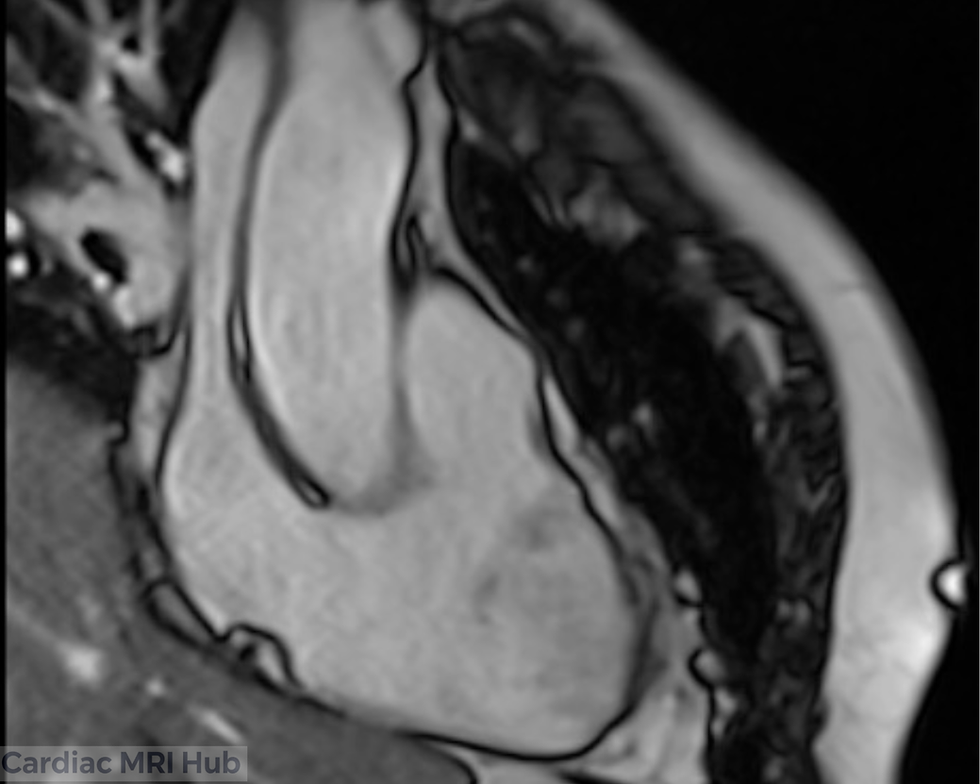
The right ventricle axial stack view is a fundamental cardiac MRI sequence for comprehensive right ventricular volume assessment and functional analysis. This imaging plane provides detailed visualization of RV geometry, wall motion, and chamber dimensions throughout the cardiac cycle. Understanding proper planning considerations ensures diagnostic accuracy and complete anatomical coverage for clinical decision making.
RV Axial Planning

Right Ventricle Axial Stack View Planning
Key Considerations for Planning
Orientation: The axial view is typically obtained by slicing through the right ventricle at various levels, ensuring clear visualization of the chamber's structure and its relationships with adjacent cardiac components.
Field of View: The field of view must adequately encompass the right ventricle and adjacent structures, preventing any significant anatomical features from being excluded.
Timing: Image acquisition should be synchronized with the cardiac cycle, to enhance visualization of chamber dimensions and function.
Contrast Agents: The use of contrast agents may be beneficial for better delineation of myocardial tissue, aiding in diagnostic accuracy.
Clinical Applications
Assessment of right ventricular size and function.
Evaluation of right ventricular wall motion abnormalities.
Identification of congenital heart defects.
Monitoring of right ventricular hypertrophy or dilation over time.
Key Features of the Axial Stack View
Right Ventricle: Detailed analysis of right ventricular volume, wall motion, and overall cardiac performance.
Interventricular Septum: Assessment of the septal integrity and any potential abnormalities affecting the right ventricle.
Conclusion
Mastering the right ventricle axial stack view is essential for accurate RV quantification in cardiac MRI. Attention to proper planning including correct orientation, adequate field of view, and cardiac cycle timing, ensures high quality imaging for clinical assessment. This standardized approach enables reliable evaluation of RV function, wall motion abnormalities, and congenital heart defects, supporting optimal patient care and follow up monitoring.


Comments