Atrial Short Axis
Updated: Dec 1, 2025
The short axis view of the atria is a valuable imaging plane in cardiac MRI, providing a unique window into the structure and function of the heart’s upper chambers. As cardiac MRI continues to advance, optimized planning of the atrial short axis is increasingly important for both diagnosing and monitoring a variety of cardiac conditions. This perspective helps clinicians and technologists evaluate atrial morphology, identify subtle structural abnormalities, and accurately assess pathologies that might otherwise be missed with standard views.
Atrial Short Axis Planning

Short Axis Planning of the Atria in Cardiac MRI
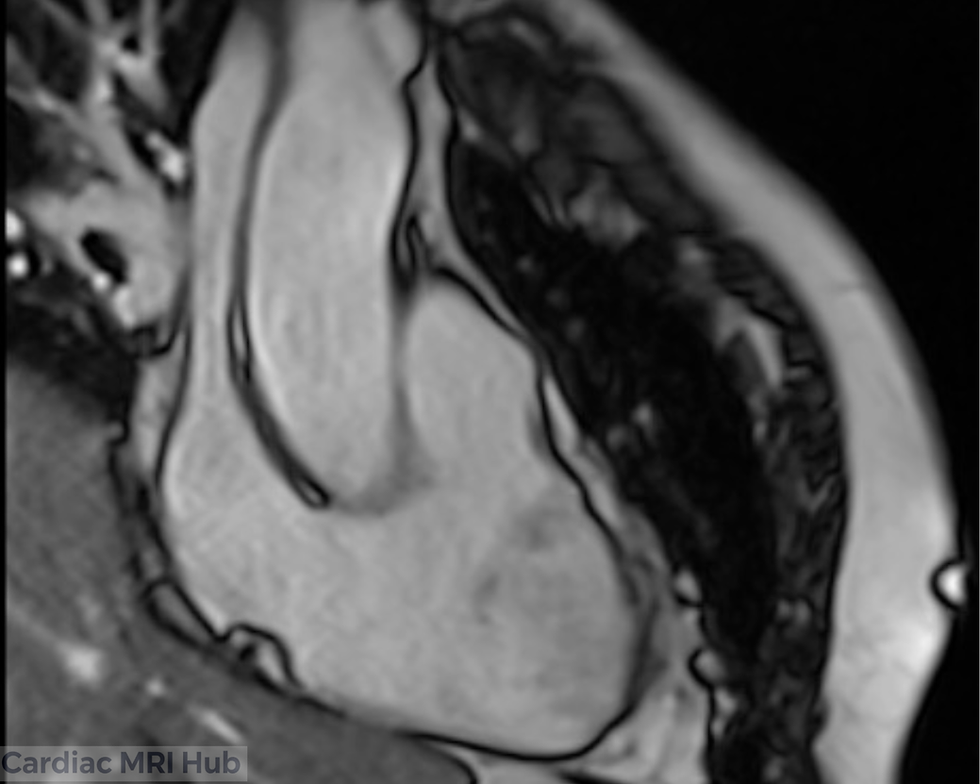
The short axis view of the atria is an important imaging perspective in cardiac MRI, offering crucial insights into the anatomy and function of the heart's upper chambers. This view primarily focuses on the left and right atria, facilitating a comprehensive evaluation of their structure and any potential pathologies.
Key Considerations for Planning
Orientation: The short axis view is typically acquired from a plane that slices horizontally through both the left and right atria, ensuring optimal visualization of their anatomy.
Slice Thickness: Employing a thinner slice thickness is recommended to enhance image clarity and detail.
Field of View: The field of view must be adequately sized to encompass both atria, ensuring that no significant structures are overlooked.
Timing: Image acquisition should be synchronized with the cardiac cycle, ideally during diastole, to maximize visualization of atrial sizes and functions.
Contrast Agents: Consider the use of contrast agents to improve the delineation of atrial tissue and enhance diagnostic accuracy.
Clinical Applications
Evaluation of atrial size and function.
Assessment of atrial dimensions and morphology.
Identification of atrial structural abnormalities.
Monitoring of atrial enlargement or other changes over time.
Key Features of the Short Axis View
Left Atrium: In-depth analysis of left atrial size and any structural irregularities.
Right Atrium: Assessment of right atrial volume, wall motion, and overall cardiac function.
Conclusion
The atrial short axis view in cardiac MRI is essential for evaluating atrial anatomy and function. With proper planning and imaging technique, this perspective enables accurate detection and monitoring of atrial abnormalities, supporting better diagnosis and patient care.


Comments